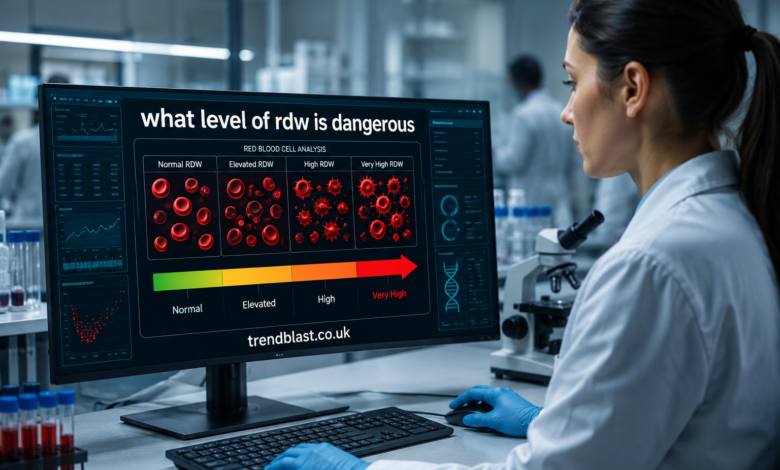
What Level of RDW Is Dangerous
Red Cell Distribution Width (RDW) measures variation in the size of red blood cells. It is commonly included in a complete blood count test.
A normal RDW range is usually around 11.5% to 14.5%, though this may slightly vary by laboratory standards.
When RDW rises above the normal range, it suggests increased variation in red blood cell size, which may indicate underlying health conditions.
| Factor | Details |
| Test Name | RDW (Red Cell Distribution Width) |
| Purpose | Measures variation in red blood cell size |
| Normal Range | 11.5% – 14.5% |
| Low RDW Meaning | Usually not clinically significant |
| High RDW Meaning | Possible anemia or nutrient deficiency |
| Related Test | Hemoglobin, MCV |
| Sample Type | Blood sample |
| Result Type | Percentage (%) |
| Common Use | Detect blood disorders |
| Risk Indicator | Nutritional or chronic disease issues |
| Emergency Level | Very high with symptoms |
| Doctor Review | Required for abnormal results |
What Level of RDW Is Dangerous in Blood Tests
RDW becomes concerning when it goes significantly above the normal range, typically above 15% to 16%.
Higher values may suggest conditions like iron deficiency anemia, vitamin B12 deficiency, or chronic inflammation.
However, RDW alone is not used to diagnose a disease and must be evaluated with other blood markers.
Very high RDW levels combined with symptoms may indicate more serious underlying health issues.
What Level of RDW Is Dangerous and Why It Happens
An increase in RDW happens when red blood cells vary widely in size.
This variation may occur when the body struggles to produce healthy red blood cells.
Common reasons include nutritional deficiencies, chronic illness, or bone marrow problems.
In some cases, temporary changes such as recovery from blood loss may also increase RDW.
What Level of RDW Is Dangerous with Low Hemoglobin
When RDW is high and hemoglobin is low, it often points toward anemia.
Iron deficiency anemia is one of the most common causes of this combination.
Vitamin B12 or folate deficiency can also lead to similar blood test results.
This pattern suggests the body is producing red blood cells unevenly and inefficiently.
What Level of RDW Is Dangerous and Symptoms to Watch
High RDW itself does not cause symptoms, but the underlying condition may.
Common signs include fatigue, weakness, and shortness of breath.
Some people may also experience pale skin or dizziness.
If symptoms appear with abnormal RDW, medical evaluation becomes important.
What Level of RDW Is Dangerous in Iron Deficiency
Iron deficiency can significantly increase RDW levels before hemoglobin drops.
This happens because new red blood cells become smaller than normal.
The variation between old and new cells increases RDW readings.
Early detection through RDW can help identify iron deficiency sooner.
What Level of RDW Is Dangerous in Vitamin Deficiency
Vitamin B12 and folate deficiencies can also raise RDW levels.
In these cases, red blood cells may become larger than normal.
This size inconsistency leads to higher RDW values in blood reports.
Long-term deficiency may affect nerve health and energy levels.
What Level of RDW Is Dangerous with Chronic Disease
Chronic diseases can also influence RDW levels over time.
Inflammatory conditions may disrupt normal red blood cell production.
Heart disease and liver disorders are sometimes linked with higher RDW.
In such cases, RDW is used as a supportive health indicator.
What Level of RDW Is Dangerous in Serious Conditions
Very high RDW values, especially above 17% or more, may need closer attention.
These levels are often seen with severe anemia or complex health conditions.
Doctors usually investigate further with additional blood tests.
It is important not to interpret RDW alone without full medical evaluation.
What Level of RDW Is Dangerous Compared to MCV
RDW is often analyzed together with MCV, which measures average red blood cell size.
High RDW with low MCV usually suggests iron deficiency anemia.
High RDW with high MCV may indicate vitamin B12 or folate deficiency.
This combination helps doctors understand the exact type of blood disorder.
What Level of RDW Is Dangerous During Recovery
RDW can temporarily rise during recovery from illness or blood loss.
As the body produces new red blood cells, size variation increases.
This does not always indicate a serious problem.
Levels often normalize once recovery is complete.
What Level of RDW Is Dangerous in Elderly People
Older adults may naturally have slightly higher RDW levels.
However, persistent elevation should still be evaluated.
It may reflect nutritional issues or hidden medical conditions.
Regular monitoring helps in early detection of health changes.
When to Worry About What Level of RDW Is Dangerous
RDW alone should not cause immediate concern.
It becomes important when combined with abnormal hemoglobin or symptoms.
Persistent high values should always be checked by a healthcare professional.
Early testing helps prevent complications from underlying conditions.
Diagnosis Based on What Level of RDW Is Dangerous
Doctors do not rely only on RDW for diagnosis.
They combine it with other blood markers for accurate results.
Tests like ferritin, iron levels, and vitamin levels are often included.
This full picture helps identify the root cause.
Treatment After What Level of RDW Is Dangerous
Treatment depends on the underlying reason for high RDW.
Iron supplements may be used for iron deficiency anemia.
Vitamin B12 injections or tablets may be prescribed if needed.
Lifestyle changes like balanced diet also support recovery.
What Level of RDW Is Dangerous in Simple Terms
RDW becomes concerning when it is consistently above normal range.
The higher the value, the more variation in red blood cell size.
This may indicate anemia or other health conditions.
Medical review is important for proper understanding.
FAQs
What is a normal RDW level?
A normal RDW level is usually between 11.5% and 14.5%, depending on the lab.
Is a high RDW always dangerous?
Not always, but it may indicate an underlying condition that needs attention.
Can RDW be high without symptoms?
Yes, RDW can be high even when no symptoms are present in early stages.
What is the most common cause of high RDW?
Iron deficiency anemia is one of the most common causes.
Should I worry if RDW is slightly high?
A slight increase may not be serious, but it should still be reviewed with other test results.
Read more: Beaconsoft Latest Tech: How Emerging Technologies Are Shaping the Future